
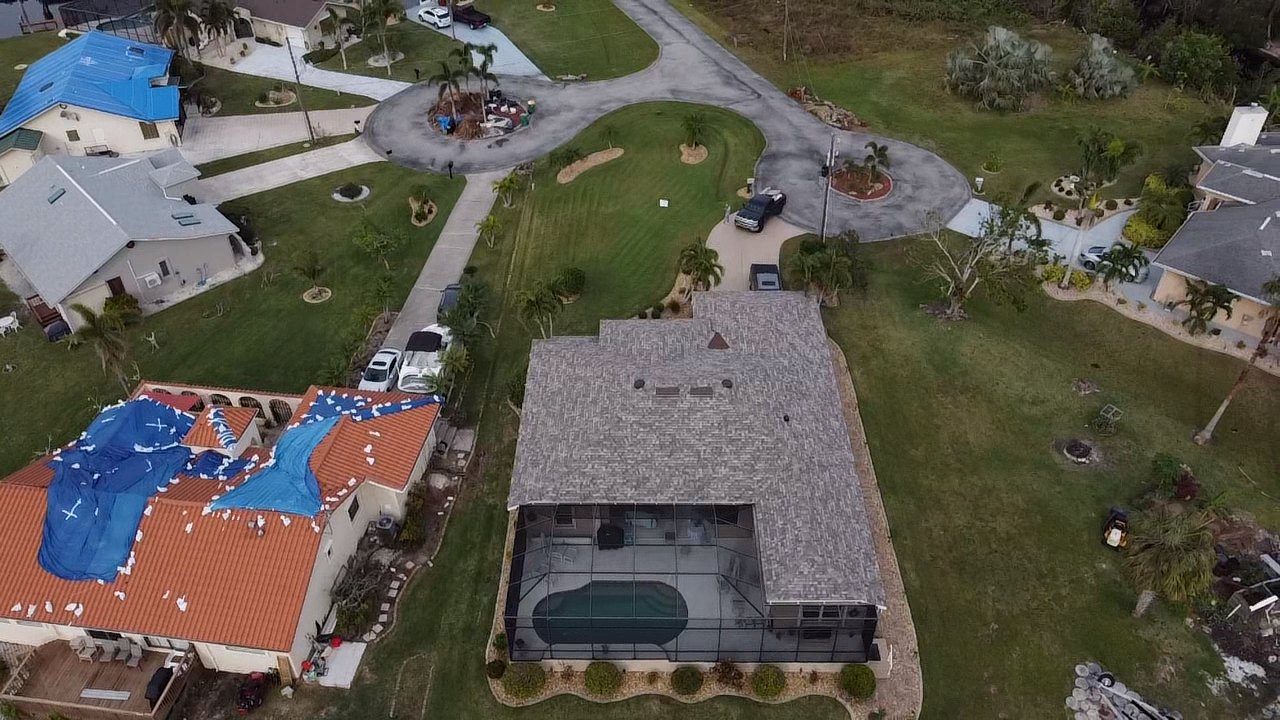
Summary: Florida homeowners can have hidden wind damage on the roof even without obvious leaks. Strong winds can weaken shingles, flashing, and other roofing materials, letting moisture in and causing structural problems over time. Catching warning signs early, such as lifted shingles, granule loss, damaged vents, and attic moisture, helps prevent costly repairs and insurance complications. After a storm, do a safe ground-level inspection, document the damage, and schedule a professional roof assessment.
When high winds tear through Florida, the first thing homeowners look for is missing shingles in the yard or water pouring through the ceiling. The sky clears, you clean up the debris, and you assume your property survived unscathed. But out in the field, we know the most dangerous wind damage to roofs rarely announces itself with a dramatic leak.
Tropical gusts and seasonal squalls routinely break the adhesive bond between shingles without blowing them off completely. These lifted shingles create an invisible entry path for Florida’s torrential rains, quietly saturating your underlayment, rotting the roof deck, and breeding mold in your attic insulation.
Homeowners often discover the problem six to nine months later, only to have the insurance claim questioned as long-term wear and tear or neglected maintenance. Here you’ll learn how to spot obvious and hidden damage, how different roofing systems fail under uplift pressure, and the exact steps for documenting damage. If your home was recently hit, prompt Florida roof storm damage repair is the best way to protect your home and its value.
The physics of roof wind damage: why Florida homes are at high risk
Fast-moving air acts on your house the way it acts on an airplane wing. It creates a low-pressure suction effect over ridges, eaves, and corners. A major storm doesn’t just push against your exterior walls; it tries to pull the lid right off the building.
On job sites across Northwest Florida, our crews consistently find that roof perimeters take the highest stress. Gusts of 45 to 55 mph, common in strong Gulf Coast thunderstorms, act like a pry bar. That’s enough to break loose shingle adhesive strips and make loose flashing chatter against the fascia.
When gusts hit 56 to 73 mph, the real destruction starts. Shingle tabs tear off entirely, ridge vents lift away from the deck, and gutters loosen from their brackets. Once winds reach 74 mph (Category 1 hurricane territory), extreme uplift pressure can pull decking fasteners loose, break tile bonds, and leave the underlayment fully exposed.
8 critical signs of roof wind damage Florida homeowners must inspect
If you look closely along your roof’s rake edge, you’ll often notice the early indicators. Here are eight critical signs our crews inspect for.
1. Missing or blown-off shingles
Look for distinct checkerboard loss patterns across the main slope, or bare patches exposing the black underlayment.
2. Creased and lifted shingle tabs
We call this the “flapping effect.” High gusts bend the shingle backward again and again, permanently fracturing the fiberglass mat beneath the asphalt. You’ll see a dark, horizontal crease line across the tab.
3. Excessive granule loss accumulating in gutters
Wind vibration scours off the ceramic granules that protect shingles from UV. If you see heavy piles of sand collecting in your gutters and downspouts, the asphalt underneath is exposed to the harsh Florida sun.
4. Damaged or displaced flashing
Watch for perimeter metal pulling away from the fascia board. That gap lets driving rain get directly behind your siding and trim.
5. Damaged ridge vents and pipe boots
Look for ridge vents that have shifted or lifted and pipe boots that are cracked or knocked crooked. Crooked plumbing boots are a major leak hazard.
6. Attic insulation compaction
Water tracks along the rafters before it ever drops onto your ceiling drywall. Finding wet, matted insulation is one of the clearest signs of hidden roof leaks before permanent interior damage occurs.
7. Drywall discoloration and musty odors
Early mold growth from small breaches in your roof underlayment can make your home smell musty within days.
8. Exterior soffit separation
Look for soffit panels that are bowed, loose, or missing. Wind forced in through soffit vents pressurizes the attic from the inside, pushing up on the roof deck while the storm pulls on it from above.
Material-specific wind damage: shingles vs. tile vs. metal
Before climbing a ladder or calling an adjuster, we recommend running through a proper hurricane roof damage checklist tailored to your specific material.
Older 3-tab asphalt shingles are especially vulnerable to seal-strip fatigue. Even heavy architectural shingles tear in high wind if the original nailing pattern was sloppy. Concrete and clay tile roofs aren’t invincible either; our inspectors often find cracking from wind-borne debris, along with broken mortar and foam adhesive bonds that are supposed to hold the heavy tiles in place. Standing seam and exposed-fastener metal roofs handle wind well, but violent pressure shifts can cause panel seam separation and fasteners backing out. If you’re weighing materials for a replacement, our metal roof vs. shingles comparison breaks down how each one holds up.
The hidden domino effect: what happens if you ignore wind damage?
The biggest mistake we see is waiting. Delayed action is what gets wind claims questioned or denied, and ignoring the damage sets off a quiet, expensive chain reaction. First, bare asphalt breaks down faster under UV. Next, water gets in during routine afternoon sea-breeze downpours. Over a few short months, that moisture can cause serious rot in your plywood decking.
Claims can be denied as long-term wear and tear when damage isn’t reported and addressed promptly. An adjuster has to judge whether damage came from the storm or from age, and the longer you wait, the harder it is to show the difference. You also need to understand Florida’s 25% roof rule. Under the Florida Building Code, if 25% or more of a roof section is repaired or replaced within a 12-month period, the entire section generally has to be replaced to current code. Roofs built to the 2007 Florida Building Code or later are exempt, so only the damaged portion has to meet current code.
Why trust Elite-Pro Roofing & Construction?
Handling post-storm roof repairs in Florida takes more than general contracting. It takes local experience with coastal weather and regional building codes.
At Elite-Pro Roofing & Construction, we bring years of dedicated roofing experience in some of Florida’s toughest storm zones. Our team is state-licensed (CCC1333764), insured, and certified by leading material manufacturers to install roofing systems rated for winds of 130 mph and up. We provide zero-pressure inspections, including high-resolution aerial drone photos. We don’t use aggressive sales tactics; we give you the facts about your roof’s condition. We know the Florida Building Code, and we document what we find with photos and a written scope you can share with your insurance adjuster.
Step-by-step action plan: what to do immediately after high winds
Step 1: Do a safe ground-level visual inspection
Don’t climb onto a damaged roof. Stay in your yard with binoculars. Photograph missing shingles, dented gutters, and debris in the grass.
Step 2: Temporary emergency mitigation
If you spot missing sections, contact a pro for emergency roof tarping services right away. Proper tarping stops active water damage, and most policies expect you to take reasonable steps to prevent further damage. Make sure the crew doesn’t use destructive nailing patterns to secure the tarp.
Step 3: Schedule a professional roof inspection
Binoculars can’t spot wet insulation. An attic check and a close-up look at the roof surface find what ground-level visual sweeps miss entirely.
Step 4: Start the Florida insurance claim process
Knowing how to file a roof insurance claim in Florida is critical. Under Florida Statutes § 627.70132, you generally have one year from the date of loss to file a new claim. Have a licensed roofer document the damage with photos and a written scope, and meet your adjuster on-site. Claim decisions always stay with you and your insurance carrier.
Post-storm damage reference table
| Damage Type | Visual Indicator | Immediate Action Needed |
|---|---|---|
| Creased shingle tabs | Horizontal dark line across the shingle | Professional inspection |
| Lifted rake flashing | Gaps between the metal edge and fascia | Have the edge resecured promptly |
| Dislodged ridge cap | Open gap along the roof peak | Urgent tarping needed |
| Granule washout | Sand accumulating in downspouts | Inspection; check the shingles’ age |
Frequently asked questions
What are the first signs of wind damage?
Look for lifted shingles, dark horizontal crease lines across the tabs, or heavy piles of sand washed into your gutters.
Can wind ruin my roof even if there are no leaks?
Absolutely. Wind breaks the seal holding your shingles down. Water can sit under there for weeks before it finally stains your ceiling drywall.
How much wind does it take to damage a roof?
Gusts as low as 45 mph can lift older shingles. At hurricane force (74 mph and up), uplift can tear off shingles and ridge caps and, on weaker roofs, pull the decking loose.
Should I climb up to check my roof after a storm?
No. Hidden rot can make the deck unsafe, and loose granules are like walking on ice. Stay in the yard and use binoculars.
Will my Florida homeowners insurance cover wind damage?
Most standard Florida homeowners policies cover sudden wind damage, though some exclude wind and carry it on a separate policy. Check your policy and your hurricane deductible before filing.
How long do I have to file a roof claim in Florida?
You generally have one year from the date of loss to file a new claim (Florida Statutes § 627.70132). Don’t drag your feet.
Can a roofer just patch the missing shingles?
Sometimes. If the roof is relatively new and the shingles are still pliable, we can swap out a few tabs. If the old shingles are baked and brittle, spot repairs will just snap them.
What is the 25% replacement rule?
If 25% or more of a roof section is repaired or replaced within 12 months, the Florida Building Code generally requires the whole section to be replaced to current code. Roofs built to the 2007 code or later are exempt.
How do I spot hidden damage from the ground?
Check your downspouts for asphalt granules, look for crooked pipe vents near the peak, and see whether the metal flashing is pulling away from your fascia boards.
How much does it cost to fix wind damage?
Minor patches typically run about $350 to $1,200. If the storm totaled the roof, an architectural shingle replacement usually falls between $10,000 and $25,000 or more, depending on size, pitch, and decking condition. Our roof replacement cost guide breaks down the numbers, and we’ll price your roof in writing after the inspection.
Conclusion and next steps
Catching wind damage early is the difference between a quick repair and draining your savings account. Wood rots fast. Don’t wait until your ceiling caves into the living room.
Report storm damage to your insurer promptly, take reasonable steps to stop further water damage, and keep Florida’s one-year deadline for new claims in mind. Get ahead of it. Contact Elite-Pro Roofing & Construction today or call (888) 373-1474 for a free, no-pressure inspection. We’ll give you an honest look at exactly what’s happening up there before the next storm rolls through.