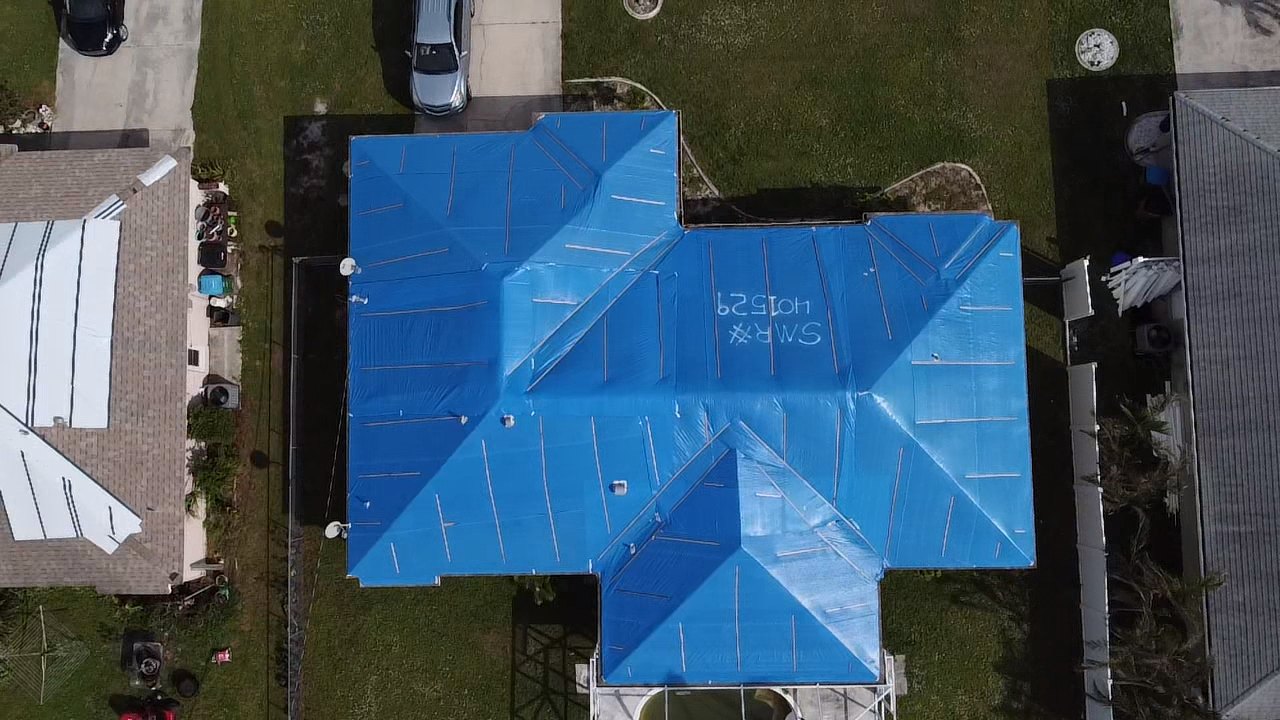
When water is coming through your ceiling, the roof doesn’t care that it’s Saturday. Elite-Pro Roofing & Construction runs 24/7 emergency roof tarping across Pensacola and Northwest Florida: a crew on your roof fast, a tarp installed the right way — battened and fastened, not draped and weighted — and insurance-ready photos of everything we found before we covered it. Call (888) 373-1474 any hour.
When a tarp is the right call
You need emergency tarping when the roof has stopped doing its job and the permanent fix can’t happen today. A tree limb through the decking. A tropical system that peeled a section of shingles down to bare underlayment. A leak that turned a bedroom ceiling into a coffee-stained map overnight. In each case the tarp isn’t the repair; it’s a controlled stop that buys you weeks to get the claim moving and materials ordered.
There’s a second reason not to wait, and it’s in your policy. Most Florida homeowner policies require you to take reasonable steps to prevent further damage after a loss, and tarping is the textbook example. Skip it, and the second round of water damage — the soaked insulation, the buckled flooring — may not be covered at all.
What a proper tarp job looks like
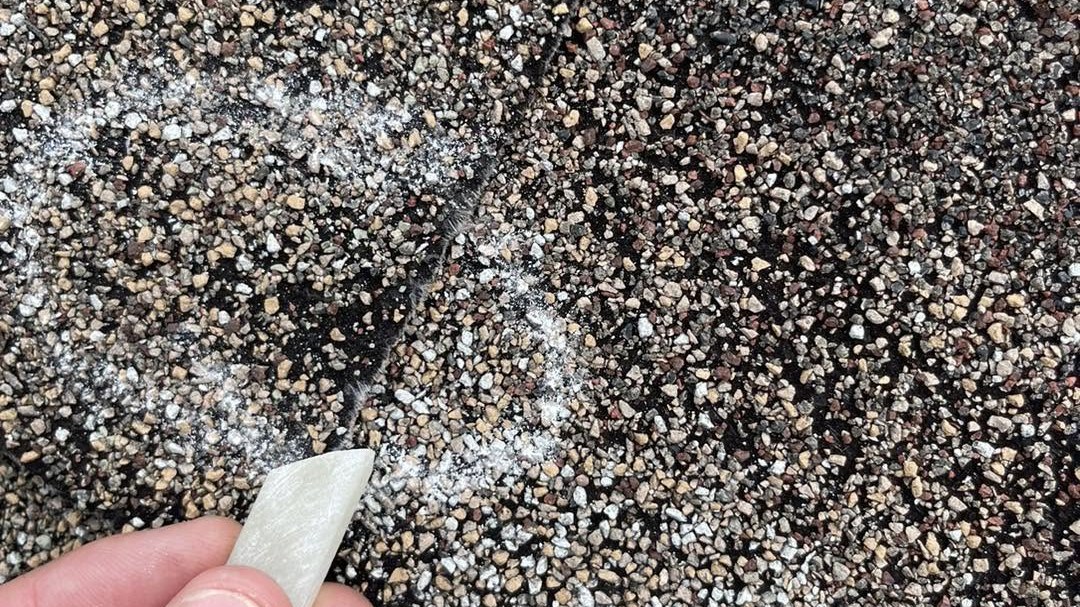
A tarp thrown over the ridge with sandbags on the corners is not a tarp job. In a coastal wind zone it’s a sail, and by the next afternoon it’s flapping, torn at the grommets, and grinding granules off your shingles.
Our crews do it the way it holds. Heavy-gauge reinforced poly sized to run past the ridge and well beyond the damaged area, so water sheds over the tarp instead of under it. The edges get wrapped around furring strips and screwed through into solid framing, which turns the perimeter into a continuous anchor instead of a handful of stress points. Laps face downslope, shingle-style. On steep or complex sections we add intermediate battens so wind can’t get a fist under the field of the tarp. It’s the difference between a tarp that survives the next squall line and one you’re chasing across the yard.
Photos your insurance company will actually accept
Before anything gets covered, it gets documented. We photograph the point of entry, the damaged shingles or decking, and any interior damage you show us, then photograph the completed tarp installation. You get the full set, along with an itemized invoice. That paper trail does two jobs: it supports reimbursement of the tarping itself as emergency mitigation, and it preserves evidence of the storm damage that a tarp would otherwise hide from your adjuster. If a claim makes sense, our retail and insurance claims team picks it up from there and meets the adjuster on the roof.
Hurricane and tropical storm response
We’ve worked the aftermath of Sally, Ian, and Milton, and we know how the days after landfall go: hundreds of homes opened up at once, and a wave of out-of-town operators with a ladder, a magnetic sign, and no license number. We’re the other thing — a local, FL-certified roofing contractor (CCC1333764) based at 10 E Fairfield Dr in Pensacola, with crews that triage by severity. Active interior leaks come first. We keep tarping stock on hand ahead of named storms so we’re not competing with the whole coast for materials the morning after.
Speed is the point either way, storm or no storm. Sometimes what starts as a tarping call ends even better, as a same-day patch:
“I called on a Saturday morning for help with a leak. Josh was here by 9:45! Very professional, very personable, explained everything in detail, AND patched the leak.” — Kris Machen, Google review
From tarp to permanent fix
A tarp is chapter one, not the whole book. Once the roof is secured, we scope the permanent work: a targeted roof repair if the damage is contained, or a full replacement if the storm made the decision for you. Because the same company handles tarping, claim documentation, and the build, nothing gets lost in a handoff, and the photos we took at 7 a.m. on day one are the same ones supporting your scope on day thirty. We cover the whole residential roofing side of the house, from Pensacola out to Gulf Breeze, Milton, Navarre, and the Fort Walton Beach–Destin corridor.
Frequently asked questions
How fast can you get to my house?
Call (888) 373-1474 and you’ll get a real answer for your address and conditions. Outside of widespread storm events, same-day response is the norm; Kris called on a Saturday morning and had Josh on site by 9:45. After a major storm we triage, and homes with active interior leaks go to the front of the line.
Will insurance pay for the tarp?
Usually, yes. Emergency mitigation is generally a covered, reimbursable expense under Florida homeowner policies because the policy itself obligates you to prevent further damage. We can’t speak for your carrier, but we set you up to be reimbursed: itemized invoice, dated photos, and documentation of the underlying damage.
How long can a tarp stay on the roof?
Weeks, not seasons. Sun and wind break down poly tarps, and most are done well inside 90 days. Treat the tarp as a countdown clock: we install it, then get the permanent repair or replacement scheduled before the clock runs out.
Can I just tarp it myself?
We’d rather you didn’t. Wet shingles on a pitched roof are where homeowner ER visits come from, and a badly anchored tarp can do more harm than the leak, both to the roof and to whatever the tarp hits when it leaves. Do your mitigation from the ground: move furniture, catch water, photograph everything, and call us.
Get the roof secured tonight
If water’s getting in, don’t wait for business hours. Call (888) 373-1474 now and we’ll get a crew moving; or if it can hold until morning, contact us and we’ll schedule first thing. Tarping stops the bleeding, the free estimate on the permanent fix comes with it, and you’ll deal with one licensed local team from the first photo to the final shingle.