A metal roof is the last roof most Pensacola homeowners will ever buy. Standing-seam and metal shingle systems last 40 to 70 years, hold up to hurricane-force wind that strips asphalt shingles off in sheets, and can earn wind-mitigation credits that lower your insurance premium every single year. Elite-Pro Roofing & Construction installs metal roofing across Pensacola and the Northwest Florida coast under state license CCC1333764, with more than 1,100 projects behind us and a 5.0-star Google rating from 100+ homeowners.
Standing seam or metal shingles?
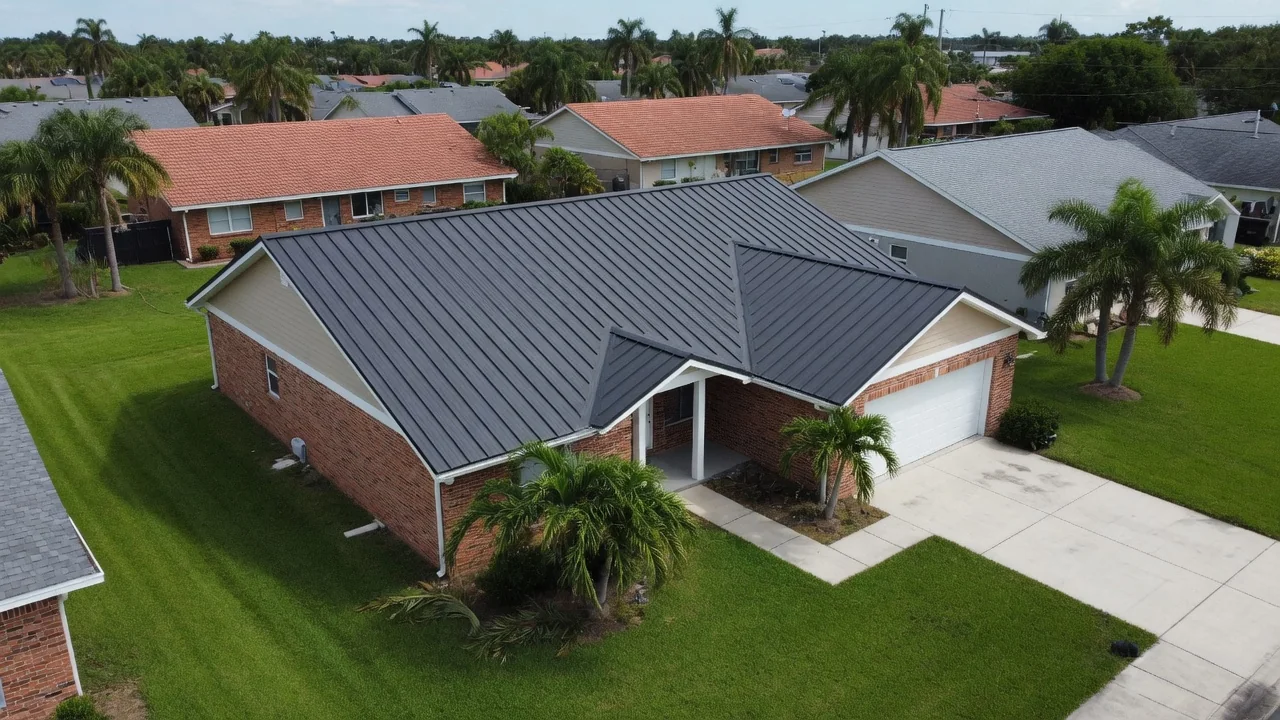
Standing seam is the system most people picture: long vertical panels, typically 24-gauge steel, joined at raised seams with concealed clips. No exposed fasteners means no screw gaskets drying out in the Florida sun and no rows of future leak points. The panels expand and contract with our temperature swings while the clips hold everything tight to the deck. It’s the cleaner look and the longer-lived system, and it’s what we recommend for most homes.
Metal shingles are the middle path. They’re stamped steel or aluminum profiles that mimic architectural shingle, shake, or tile, installed in interlocking courses. You get most of metal’s wind and longevity advantages at a lower price point than standing seam, with a look that blends into a shingle neighborhood. If your HOA is picky or you just don’t want the farmhouse aesthetic, this is usually the answer.
Either way, the roof under the metal matters as much as the metal. We tear off the old roof, inspect and re-nail the deck to current code, run peel-and-stick underlayment in the critical zones, and flash every penetration in matching metal. A 50-year panel over a rotten deck is a 5-year roof.
Built for hurricane country
Pensacola sits in one of the highest design-wind zones in the country, and the Florida Building Code demands roofs engineered for it. The metal systems we install carry Florida Product Approval, with uplift testing behind the ratings and installation to the tested spec: correct clip spacing, correct fastener schedule, correct edge metal. That last part is where roofs actually fail in a storm. Wind gets under the eave and rake edges first, so we treat edge details as structural, not trim.
Asphalt shingles are rated in the 110 to 130 mph range on their best day, and that assumes perfect adhesive bonding. Concealed-fastener metal systems test dramatically higher, which is why after every named storm you can drive a Gulf Breeze or Navarre street and pick out the metal roofs: they’re the ones still fully dressed.
Metal vs asphalt: the honest math
Up front, metal costs real money, typically two to three times what an architectural shingle roof runs. We’re not going to dance around that. The case for it is what happens after year 15.
An asphalt roof on this coast lasts 15 to 25 years, and the salt air and UV push most of them toward the short end. A metal roof lasts 40 to 70. Buy one metal roof or buy two to three shingle roofs (at whatever shingles cost in 2045), plus the repairs, tarps, and insurance headaches in between. Metal also reflects heat instead of soaking it up the way dark shingles do, which your July power bill will notice. If you’re planning to sell in five years, shingles may be the smarter spend, and we’ll tell you so. If you’re staying, metal usually wins the long game.
Insurance and wind-mitigation savings
Florida insurers price your premium partly on how your roof is built, and a wind-mitigation inspection is how you prove it. A properly installed metal system, with sealed roof-deck details and rated attachments documented, can qualify you for meaningful wind-mitigation credits. Our customers have seen it show up in black and white:
“when we got our wind mitigation inspection the quality of the work showed in our report.” — Jeanette Todd, Google review
If storm damage is what’s pushing you toward a new roof in the first place, our insurance-claim team handles the documentation and meets the adjuster on your roof. Some homeowners have upgraded from shingle to metal at replacement time by paying just the difference over their covered claim.
Frequently asked questions
Is a metal roof loud when it rains?
Not on a house. That rain-on-a-tin-barn sound comes from panels over open framing. A residential metal roof sits on a solid plywood deck with underlayment between, and above your insulated attic. Inside, it’s no louder than shingles.
Does metal attract lightning?
No. Lightning strikes the tallest object around regardless of material. If it ever did hit, metal is actually safer because it’s noncombustible and spreads the energy instead of igniting.
How much more does metal cost than shingles?
Plan on roughly two to three times the cost of an architectural shingle roof, depending on panel style, gauge, and roof complexity. We quote both options side by side on request so you can see the real numbers for your house instead of internet averages.
Can you install metal over my existing shingles?
Code sometimes allows one overlay, but we almost always recommend a full tear-off. It’s the only way to inspect the deck, fix hidden rot, and re-nail to current wind code, and it keeps your wind-mitigation paperwork clean.
If you’re weighing metal against another reroof, start with a free roof inspection and estimate and get real numbers for your home. We install metal roofing throughout the area, including Gulf Breeze and Navarre, and everything else under our residential roofing roof too. Call (888) 373-1474 or contact us for your free estimate.