
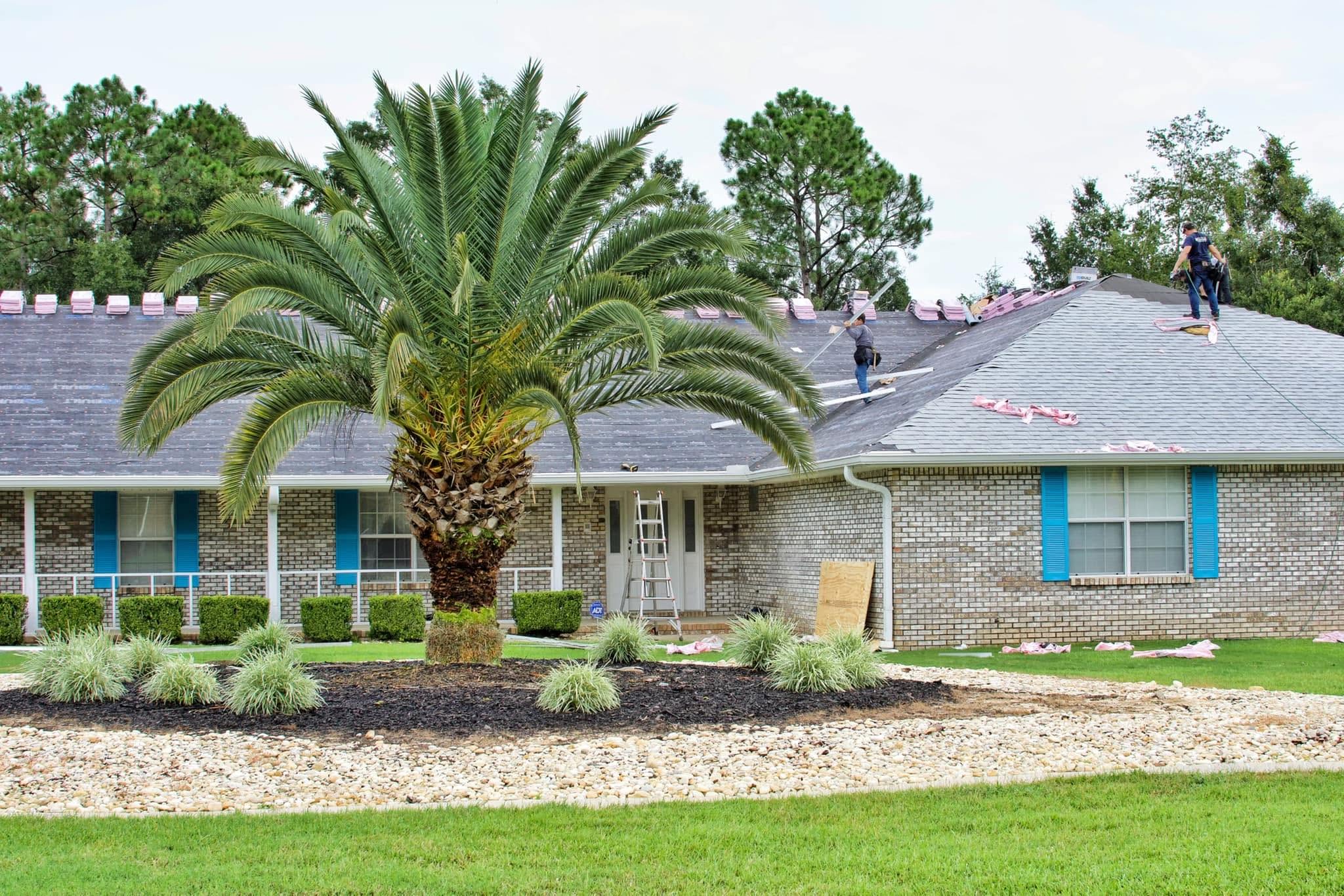
Summary: Choosing between roof repair and replacement depends primarily on the roof’s age, the extent of damage, and the cost of ongoing repairs. Minor, localized issues such as a few missing shingles, damaged flashing, or small punctures can often be repaired, while widespread deterioration, structural damage, recurring leaks, or an aging roof may require full replacement. Evaluating these factors through a professional inspection can help prevent costly temporary fixes and protect the home from further water and structural damage.
Walking out to the living room and spotting a fresh, spreading brown water stain on the drywall instantly ruins your day. Right away, you start wondering if you are looking at a simple weekend patch job or an eye-wateringly expensive total tear-off. It is completely normal to stress over unexpected repair bills, fear making the wrong contractor call, and worry about hidden rot eating away at your attic timbers.
Here is the kicker: slapping a cheap fix onto an old, failing roof can actually drain your wallet much faster in the long run. Band-aid solutions on worn-out shingles rarely hold up through the next heavy storm, often leaving you right back where you started, only now with worse water damage.
Figuring out whether you need a roof repair vs. roof replacement means looking at a few straightforward factors: the actual age of your materials, the extent of the damage, and the math behind the repair bills.
Expert insight: We see homeowners try to save a quick buck by patching the same leaky valley three years in a row. By the time they finally give in and pull the trigger on a full replacement, the water has already rotted out the underlying plywood and ceiling joists, turning a simple job into a big carpentry project.
The basics: roof repair vs. roof replacement defined
Before crawling up a ladder, it helps to understand what separates a simple fix from a total overhaul.
What constitutes a roof repair?
A repair targets one specific trouble spot. Think about slapping down fresh flashing around a leaky chimney, swapping out a half-dozen shingles ripped off by a high wind gust, or sealing up a plumbing boot. Repairs make sense when the rest of the house is sound and the materials still have plenty of life left in them.
What constitutes a roof replacement?
A replacement strips everything down to bare wood. Crews pull off all the old layers, check the wooden decking for soft spots, roll out fresh synthetic underlayment and ice shields, and nail down a completely brand-new system. This is what you need when wear and tear is systemic or age has simply beaten the materials past the point of no return.
7 clear signs your roof only needs a repair
Not every drip means a brand-new bill. If your house was shingled fairly recently, you can usually get away with a targeted fix. Look for these seven indicators.
1. Localized missing or damaged shingles
A rogue windstorm might rip off four or five tabs in one specific corner of the roof. If the rest of the slope looks solid, a roofer can easily slide in matching replacements without touching the rest of the house.
2. Minor leaks around roof penetrations
Most water entries happen where something cuts through the roof plane. If a rusty chimney collar or a degraded rubber boot around a plumbing vent is letting water slip by, replacing that specific flashing fixes the issue entirely.
3. A relatively young roof age
If your architectural shingles went up less than 15 years ago, they are still flexible and strong. Contractors can easily lift the surrounding tabs to nail down repairs without snapping the brittle old asphalt.
4. Small amounts of granule loss
Finding a handful of sandy granules in the gutters after a heavy spring downpour is normal. As long as you aren’t seeing black patches of exposed fiberglass matting, the protective layer is doing its job.
5. Isolated punctures from falling debris
A heavy tree limb crashing down and punching a hole through the slope calls for a localized fix. A carpenter can swap out that one sheet of damaged plywood and patch the shingles over it.
6. Popped nails
Sometimes, extreme summer heat makes fasteners back out of the wood deck, pushing a shingle up like a tent flap. Driving a new nail a couple of inches over and sealing the hole solves the problem.
7. Fascia and soffit damage
If clogged gutters have rotted out the wooden trim boards along the edge of the roof, the actual shingle field above might still be bone dry and perfectly healthy.
Pro tip: Always save a bundle of leftover shingles from your initial installation. Getting an exact color match ten years down the road is nearly impossible otherwise.
5 critical signs you need a full roof replacement
There comes a point where throwing more patch material at a roof is just burning cash. Watch for these five hard indicators that time’s up.
1. Reaching the end of the roof lifespan
Standard three-tab shingles usually max out around 20 years, while thicker architectural styles stretch to 25. Once you cross that threshold, the asphalt loses its oils, and the whole system begins failing simultaneously.
2. Widespread curling, buckling, or missing shingles
When shingles start curling up at the edges like potato chips, they can no longer shed rainwater properly. If you spot these extensive signs of storm damage or general wear across multiple slopes, a few tubes of roofing cement won’t save it.
3. Severe sagging or structural damage
A roofline should look straight and sharp. If you see a visible dip or a sagging ridge, moisture has likely rotted the structural rafters underneath. That demands an immediate structural overhaul.
4. Extensive daylight in the attic
Climb up into your attic on a bright sunny afternoon, turn off your flashlight, and look up at the roof boards. If you see pinpricks of daylight shining through, water has an open invite to pour straight into your home during the next heavy storm.
5. Recurring leaks despite previous repairs
If you have paid to patch the exact same corner twice and water keeps coming back, the underlying deck is likely shot. It is time to stop throwing money at temporary fixes.
Common mistake: Nailing a second layer of shingles straight over an old, worn-out roof. This adds huge weight, traps heat, hides rotting plywood, and voids most manufacturer warranties. Always demand a clean tear-off.
Cost comparison: is it cheaper to repair or replace?
Wallet pain usually dictates this decision, so let’s look at the numbers.
Average costs for minor vs. major repairs
Minor service calls like resealing a vent pipe or swapping a few tabs usually cost a few hundred dollars. Larger valley rebuilds might run into the low thousands. For most homeowners, this is a manageable surprise.
Average costs for a full roof replacement
A complete overhaul depends entirely on your square footage and material choices. When pricing out the average cost of a new roof, standard asphalt remains the most economical route, while heavy metal or clay tile installations require a significant upfront investment.
The 30% rule: when replacement becomes more cost-effective
Experienced contractors live by the 30% rule. If a repair estimate creeps past 30% to 40% of what a brand-new installation would cost, fixing it is a bad financial move. Put that money toward a fresh roof instead.
How roof age and material dictate your decision
The product protecting your home changes the math entirely.
Asphalt shingles vs. metal vs. tile lifespans
Asphalt is affordable but wears out fast at 20 to 25 years. Standing seam metal roofs easily push 40 to 70 years, and slate or tile can outlast the owners. A dented metal panel at year 30 is worth repairing; an asphalt shingle at year 30 belongs in a dumpster.
Can a 20-year-old roof be saved?
Almost never. Asphalt goes through thousands of freeze-thaw cycles and brutal summer heatwaves. By year 20, those shingles are bone-dry and brittle. Try to lift one, and it snaps like a saltine cracker.
Quick decision summary matrix
| Damage Type | Recommended Solution | Cost Range | Expected Longevity |
|---|---|---|---|
| Localized missing shingles | Repair | Low | Extends life 5-10 yrs |
| Faulty chimney flashing | Repair | Low-Mid | Extends life 5-10 yrs |
| 20+ year old asphalt | Replace | High | 20-50+ yrs |
| Rotting deck / Sagging | Replace | High | 20-50+ yrs |
Why choose Elite-Pro Roofing & Construction
With over a decade of hands-on experience inspecting and restoring residential systems across the region, our crew has seen every conceivable wear pattern. We built our name on straight-shooting honesty: if your roof only needs a twenty-dollar tube of caulk, we will never try to sell you a twenty-thousand-dollar replacement. Our licensed, insured techs use proper diagnostic tools to check everything from the attic insulation to the flashing. We combine real field experience with solid warranties to keep your home safe for decades.
Frequently asked questions
How do I know if my roof needs repair or replacement?
Look at the age, check for widespread granule loss, and look for sagging. Isolated issues mean a patch will do.
How much damage does a roof need before replacement?
Systemic damage spanning multiple slopes or rotting wooden decking means it’s time for a full tear-off.
How long does a roof repair typically last?
A solid patch on a healthy, younger system can easily buy you 5 to 15 more years.
Does storm damage always require roof replacement?
No. Isolated hail strikes or wind tears can often be patched if the underlying deck is still strong.
Can a 20-year-old roof be repaired?
Rarely. The asphalt becomes too brittle to work with without breaking surrounding shingles.
Is it cheaper to repair a roof or replace it?
Repairs cost less upfront, but replacement makes more financial sense if the system is near the end of its life.
What are the signs that a roof needs replacing?
Keep an eye out for severe curling, large bald patches, sagging deck lines, and daylight in the attic.
How many missing shingles require a roof replacement?
A few missing tabs in one spot means a simple repair. If wind strips shingles across multiple slopes, you need a full replacement.
Will homeowner’s insurance pay for a roof replacement?
Insurance covers sudden storm damage like hail or high winds, but it never covers normal wear, tear, or old age.
Can I install new shingles directly over my old roof?
It saves upfront cash, but it adds heavy weight, traps heat, hides rotted wood, and voids warranties. A full tear-off is always better.
Conclusion & next steps
Deciding whether to patch a leak or rip the whole thing off comes down to simple math, material age, and how bad the damage really is. Do not roll the dice on your home’s framing or wait until water starts pouring through the ceiling light fixtures. The smartest move you can make right now is to schedule a professional roof inspection with our crew so you get a straight, honest answer.