
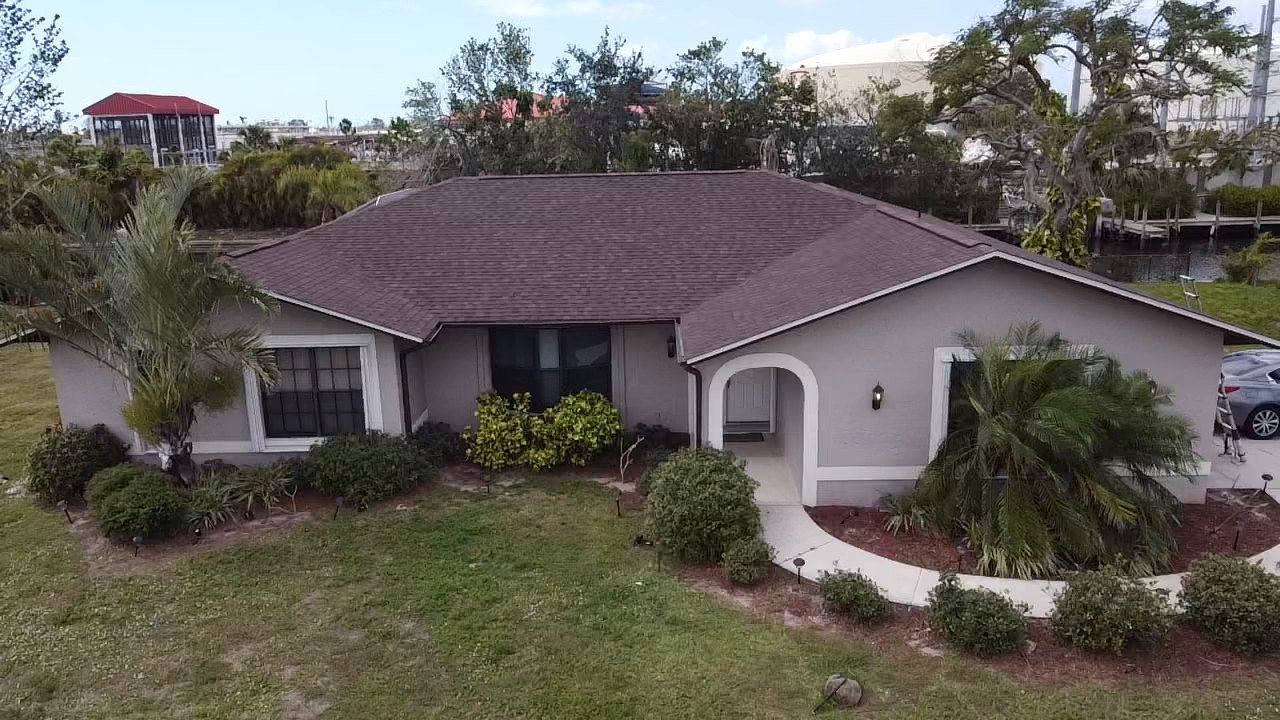
Summary: A roof can often be repaired instead of replaced when damage is limited to a small area, such as a few missing shingles, a localized flashing problem, minor decking damage, or a single leak, while the surrounding roofing system remains in good condition. Replacement becomes the better option when damage is widespread, leaks keep returning, decking is extensively deteriorated, or the roof has little reliable service life left. A professional roof inspection is the best way to find out which situation you are in.
You notice a stain on the ceiling after a night of heavy rain. A couple of shingles are sitting in the grass after strong wind. Then someone inspects the roof and starts talking about replacement.
That feels like a big jump, so the first question is obvious: can a roof be repaired instead of replaced?
A lot of the time, it can.
One cracked pipe boot, a loose flashing detail, several missing shingles, or a small area of bad decking does not automatically mean the whole roof is finished. The answer changes when the same roof has leaked more than once, shingles are breaking down across several slopes, or moisture has already reached a large section of the roof deck.
The useful question is not simply, “Is there damage?” It is, “How far does the damage go?”
Can a Roof Be Repaired Instead of Replaced? Quick Answer
Yes. A roof can often be repaired instead of replaced when the problem is limited to a specific area and the surrounding shingles, underlayment, and decking are still in usable condition.
Replacement starts to make more sense when deterioration is showing up in several places, leaks keep returning, structural materials are damaged, or the roof has very little dependable life left. If you are weighing the full decision, including costs and lifespans, our guide to roof repair vs. roof replacement walks through it step by step.
One roof leak does not prove the whole roofing system has failed. A vent, pipe boot, piece of flashing, or small damaged section may be responsible. The important part is figuring out whether you are dealing with one defect or the beginning of a wider pattern.
Repairs That Usually Work
A Few Missing or Damaged Shingles
A handful of shingles in the yard can make a roof look worse than it really is.
If wind damages only one small area and the shingles around it are still secure and flexible, the damaged pieces may be replaceable without reroofing the house.
The condition around the repair matters, though. Older asphalt shingles can become brittle. A roofer may lift one shingle to replace another and find that the surrounding material starts cracking. That is why a proper repair check should include the nearby shingles, fasteners, underlayment, decking, and whether a suitable replacement shingle can still be found.
A Leak From One Area
A roof leak can come from a surprisingly small problem.
The rubber around a pipe boot may split. Flashing can pull away from a chimney. A vent can lose its seal. Water can get in beside a skylight or through a damaged valley.
The tricky part is finding where the water actually entered. A stain on the bedroom ceiling does not necessarily sit directly below the opening in the roof. Water may move along decking or framing before it finally drips inside. Good leak repair starts by finding that entry point, not by sealing the first place that looks suspicious. Our post on the most common causes of roof leaks covers where to look first.
Localized Flashing Damage
Flashing protects areas where roofs meet chimneys, walls, skylights, valleys, and other penetrations.
If one flashing detail has failed but the rest of the roof is still in decent shape, full replacement may be unnecessary. A contractor may be able to remove roofing around the affected area, repair or replace the flashing, restore the underlayment where necessary, and rebuild that section.
Simply covering the area with roof cement may stop water for a while, but that is not the same as correcting the failed detail.
Minor Roof Decking Damage
Roof decking sits below the roofing material and is usually made from plywood or OSB.
If only a small area has deteriorated, that section can sometimes be removed and replaced. The roofer may strip the shingles in that area, install new sheathing, restore the underlayment, and rebuild the roof above it.
The situation changes if the decking feels soft over a broad area or appears to be sagging. At that point, the work may be much larger than a simple patch. A roof that feels soft or looks sagged should not be walked on. Get it inspected instead.
Can Part of a Roof Be Repaired?
Yes. If you are asking whether you can repair part of a roof, there are cases where patching or partial replacement works well.
Roof Patching
A roof patch deals with one defined problem.
That could mean replacing several shingles, repairing flashing, fixing a roof penetration, or rebuilding a small area over damaged decking.
A proper patch restores the roofing layers correctly instead of simply covering the surface with sealant.
Partial Roof Replacement
A partial roof replacement may involve replacing one full slope or another clearly separated area while leaving the rest of the roof alone.
This can work when one section suffered major damage but the remaining roof still has useful life.
Matching Old Shingles
This is where repairs sometimes get awkward.
Sunlight changes shingle color. Product lines get discontinued. Manufacturing batches can look slightly different. Older shingles can also become too brittle to lift safely.
The repaired section may look newer even when the work itself is completely sound. Ask to see a sample of the replacement shingle next to your roof before the work is scheduled.
Does Roofing Material Affect Whether a Roof Can Be Repaired?
Yes. Repair options change depending on what is installed on the roof.
Asphalt Shingles
Missing shingles, isolated cracks, flashing failures, and problems around penetrations are often repairable.
Replacement becomes more likely when shingles are brittle across large areas, curling on several slopes, or failing again and again.
Metal Roofing
Metal roofs can develop trouble around fasteners, seams, flashing, coatings, or individual panels.
A localized problem may be repairable, especially when matching parts and compatible materials are available.
Tile Roofing
Broken clay or concrete tiles can often be replaced individually.
The part homeowners cannot easily see is the underlayment below the tiles. If that material has deteriorated across a large area, replacing a few broken tiles will not correct the real issue.
TPO and EPDM Roofs
Low-slope roofs can develop punctures, failed seams, flashing defects, or isolated membrane damage.
Those problems may be repairable. Widespread deterioration, trapped moisture, or saturated insulation usually requires a broader solution.
When a Repair Stops Making Sense
Repairs stop being the right answer when the problem is no longer one problem.
Cracked, curled, or loose shingles on several slopes, leaks that keep returning in new places, decking that is soft over a wide area, and a roof that has already been patched again and again all point the same way. Each issue on its own might be repairable. Together, they suggest the roof itself is wearing out.
Imagine fixing a leak near the chimney in spring. A few months later, another leak shows up near a vent. Then a new ceiling stain appears after the next storm. Any one of those might be a small job. Together, they deserve a closer look.
A $1,500 repair that buys several more dependable years is one thing. Spending $1,500 on a roof that will probably need replacing soon is another. The repair price may be the same, but the value is not.
What About Storm-Damaged Roofs?
Storm damage is not automatically a replacement job. A few lifted shingles near one roof edge are very different from damage spread across several slopes.
After a storm, start with documentation. Take pictures from the ground if it is safe. Photograph interior stains and visible damage. Write down the storm date and keep records of any emergency work. Do not climb onto a wet or damaged roof just to get better photos.
Emergency tarping can help stop more water from entering, but it is not a permanent repair. A lasting repair should address the failed shingles, flashing, underlayment, decking, or other damaged components.
Insurance is a separate issue. Storm damage does not automatically guarantee a complete roof replacement. Coverage depends on the policy, cause of damage, deductible, insurer findings, and other requirements.
How a Roof Inspection Determines Repairability
A useful inspection looks beyond the first visible defect.
The roofer should check the roof surface for missing shingles, cracking, curling, punctures, loose materials, and visible storm damage. Flashing around chimneys, vents, walls, skylights, and valleys should also be examined.
If the attic is accessible, stains, damp insulation, and moisture patterns may help show where water has been traveling.
Decking should be checked for rot, soft spots, sagging, or delamination. Some damage will not be obvious until roofing material is removed.
The roofer should also consider past repairs and the likely cause of the current problem, then compare what a repair is expected to accomplish with what replacement would solve.
That is the part homeowners really need explained.
Questions to Ask Before Agreeing to a New Roof
If someone recommends a replacement, ask what exactly failed.
- Is the damage limited to one section, or is it spread across the roof?
- Can I see photographs of what you found?
- Is the decking damaged, and can that section reasonably be repaired?
- How much useful life remains in the rest of the roof?
- What warranty comes with the proposed repair?
- If repair is being ruled out, why?
A contractor should be able to explain the answer clearly rather than simply telling you that a new roof is necessary.
Should You Repair a Roof Yourself?
Looking at the roof from the ground is one thing. Working on it is another.
Wet roofing, steep slopes, weakened decking, loose storm debris, and nearby electrical hazards can make roof access dangerous.
A poorly completed repair can also create another leak by disturbing shingles, underlayment, flashing, or a roof penetration.
If the roof is wet, sagging, or storm-damaged, leave the inspection to someone equipped to work there safely.
Why Trust Elite-Pro Roofing & Construction?
Roof damage does not always mean a full replacement is necessary. If you are unsure whether repair or replacement makes more sense, an inspection from Elite-Pro Roofing & Construction can help you understand the actual condition of your roof before making a major investment.
Founder Keith Wagner has worked on roofs since 2012, and Elite-Pro has more than 1,100 projects behind it. Our team handles roof repairs, reroofing, asphalt shingles, metal roofing, gutters, storm damage, and 24/7 emergency tarping throughout Northwest Florida. We offer free inspections and commitment-free estimates, and where a roof is failing broadly we show you with photos. Elite-Pro is licensed and insured under Florida license CCC1333764, is an Owens Corning Preferred Contractor, is certified with GAF and Atlas, and has a 5.0-star Google rating across 100+ reviews.
Frequently Asked Questions
Can you repair a roof without replacing it?
Yes. Missing shingles, damaged flashing, and isolated leaks can often be repaired when the surrounding roof is still in good condition.
Can you replace just one section of a roof?
Yes. One slope or another defined section may be replaced if the rest of the roof remains serviceable.
Does one roof leak mean I need a new roof?
No. The leak may come from a vent, pipe boot, flashing detail, skylight, or damaged shingle. The source should be found first.
How many times can a roof be repaired?
There is no fixed number. If new failures keep appearing in different places, repeated repairs can eventually stop making financial sense.
Can damaged roof decking be repaired?
Yes. Small areas can sometimes be removed and replaced. Extensive rot or sagging usually requires more work.
Can missing shingles simply be replaced?
Often, yes, as long as the surrounding shingles, underlayment, and decking are still in workable condition and a reasonable match is available.
Final Answer: Repair the Problem, Not Just the Symptom
So, can a roof be repaired instead of replaced? Very often, yes.
A healthy roof with one bad spot may only need a focused repair. A roof with brittle shingles, several leaks, and deteriorated decking is a different situation.
That is why the inspection matters more than the first symptom you notice. Ask the contractor to show you what failed, whether the damage is isolated or widespread, what the repair is expected to achieve, and how much useful life the rest of the roof appears to have.
A cheaper repair is not always the better deal. A full replacement is not always necessary either. The best choice is the one that actually solves the roof’s problem instead of simply covering it up. To find out which one your roof needs, schedule a free roof inspection.