
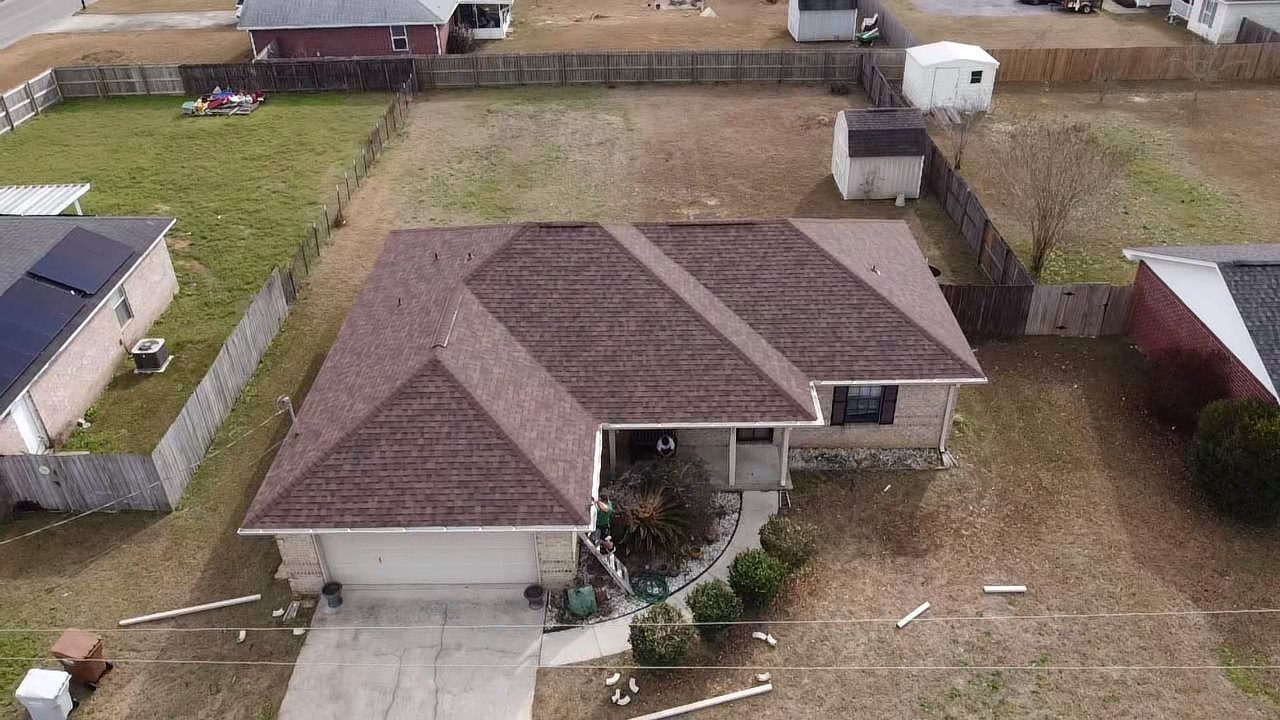
On most homes, the work on the roof itself takes one to three days. A simple shingle roof on a single-story house is often torn off and finished in one day. How long a roof replacement takes on your house depends on four things: the roof’s size and shape, what the crew finds under the old shingles, the weather, and whether a permit or an insurance claim has to clear first. Usually the bigger variable is the wait before the crew shows up, not the days spent on the roof.
Many of our customers tell us their new roof was finished in one or two days. That is what a well-run job looks like: materials delivered ahead of time, a full crew on site, and a dry forecast. It is not a promise for every house, so here is what changes it.
How long does a roof replacement take from contract to cleanup?
Most homeowners picture the install day. The full roof replacement timeline has more steps, and most of the calendar time sits before anyone climbs a ladder.
- Inspection and estimate: the roof is measured, the decking is checked from the attic where possible, and you get a written scope.
- Insurance approval, if it’s a claim: the adjuster has to inspect and the scope has to be agreed. This is often the slowest step.
- Permit: most local building departments require a permit for a re-roof, and the job can’t start until it’s issued.
- Material delivery: shingles or metal panels, underlayment and flashing are dropped off, usually a day or so before the crew arrives.
- Tear-off and installation: the old roof comes off, any bad decking is replaced, and the new roof goes on.
- Cleanup and final inspection: debris is hauled away, the yard is swept for nails with a magnet, and the permit gets its final sign-off.
What makes one roof take a day and another take a week?
| Factor | Effect on time | Why |
|---|---|---|
| Size and pitch | Large or steep roofs add a day or more | More squares to tear off, and steep roofs need extra safety setup and slower footing |
| Valleys, dormers, skylights, chimneys | Adds hours to days | Every one needs careful flashing, which is slow, detailed work |
| Rotted or soft decking | Adds hours to a day | Damaged plywood has to be cut out and replaced before anything goes on top |
| More than one old layer | Adds hours | Two layers of shingles mean twice the tear-off and twice the debris |
| Metal or tile instead of shingles | Usually adds several days | Panels and tile are installed more slowly, and metal may need custom trim |
| Weather | Can pause the job entirely | Crews shouldn’t open a roof they can’t dry in before rain arrives |
Why weather matters more along the Gulf Coast
Summer in Pensacola brings afternoon thunderstorms that can build fast. A careful crew tears off only as much as it can cover with underlayment the same day, so a storm can stretch a one-day job into two. After a hurricane, the delay comes before the job instead. Demand across Northwest Florida spikes, and both crews and materials get booked up. If your roof is older and not yet damaged, planning a replacement outside the peak storm season usually means a shorter wait.
The decking surprise nobody can see from the ground
No one knows the full condition of the plywood until the shingles come off. Soft spots usually show up around old leaks, chimneys, valleys and bathroom vents. Our humid climate makes it worse when moisture has been trapped for years. Before you sign, ask how the estimate handles replacement decking and how you’ll be told if more is needed. A good crew fixes it the same day, and you shouldn’t learn about it for the first time on the invoice.
How to tell if your job will be quick or drawn out
- Likely one day: a single-story house, a simple gable or hip roof, shingles, one existing layer, no history of leaks.
- Likely two to three days: a two-story house, lots of valleys or dormers, signs of past leaks, or a second layer to remove.
- Likely longer: metal or tile, a storm claim still waiting on approval, or a busy post-hurricane season.
A roof inspection and written estimate will show you which group your house falls into, including what the decking looks like from the attic. If you’re not yet sure the whole roof needs to go, start with how to choose between repair and replacement.
Does an insurance claim slow down a roof replacement?
It can, because nothing starts until the adjuster has inspected and the scope is approved. Customers often tell us the fastest part of the job was the roof itself, and the slowest part was the paperwork. Having someone who deals with adjusters regularly and keeps you updated cuts down the back-and-forth. Here’s how we approach help with a roof insurance claim after hail or wind damage.
Common questions about roof replacement day
Can you live in a house when the roof is being replaced?
Yes, most families stay home during a roof replacement. Expect steady hammering and noise overhead all day, and keep kids and pets away from the drip edge where debris falls. Move cars out of the driveway the night before.
Can I shower while my roof is being replaced?
Usually yes. Your plumbing and water supply aren’t touched during a roof replacement. The crew may briefly work around plumbing vent pipes on the roof, but that doesn’t stop you from using water inside.
Do you have to empty the attic when getting a new roof?
You don’t need to empty it, but cover anything you care about with old sheets or tarps. Tear-off shakes loose dust, old granules and sometimes nail tips through the decking. Fragile items stored right under the roof deck are better moved.
How many years does a new roof typically last?
It depends on the material, the attic ventilation and the quality of the installation. Metal generally outlasts asphalt shingles. On the Gulf Coast, heat and storms shorten the life of any roof, so regular inspections matter more here than in milder climates.
Before you sign with anyone, ask one question: what happens if you find bad decking, and what happens if rain shows up after tear-off? A contractor with clear answers to both is the one likely to finish in a day or two without leaving you with a tarp overnight. When you’re ready to plan yours, see how we handle a full re-roof from start to finish.