
Summary: After a Florida storm, safely document roof and interior damage, make reasonable temporary repairs, save receipts, review your policy, and report the loss directly to your insurer while keeping a clear record of the claim. Florida roof claims can involve hurricane or other deductibles, replacement cost versus actual cash value, inspections, repair estimates, supplemental damage, and filing deadlines: generally one year for initial or reopened claims and 18 months for supplemental claims. Compare the insurer’s estimate with your contractor’s findings, understand the reason for any denial or underpayment, avoid signing unclear storm-repair agreements, and seek properly licensed professional help if a dispute becomes complicated.
The morning after a bad Florida storm, roof damage is not always easy to judge from the driveway. A few shingles may be missing. A section of tile may look slightly out of place. Water could be dripping into the attic even though the roof appears mostly intact from the ground. In other cases, the damage is impossible to miss.
Whatever the situation, the first few decisions matter.
Before arranging major repairs, take time to record what happened, protect the house from further water intrusion, and contact your insurer. A roof damage insurance claim Florida homeowners file after a hurricane, hailstorm, or severe wind event will usually involve photographs, inspections, estimates, policy questions, and quite a bit of paperwork.
You do not have to understand every insurance term before you report the damage. You do, however, want a clear record of the condition of the property and everything that happens afterward.
How Do You File a Roof Damage Insurance Claim in Florida?
Start with the damage you can safely see. Photograph the roof, exterior, attic, ceilings, and affected belongings. If rain is still getting inside, take reasonable temporary steps to keep the problem from getting worse. Then review your policy, report the loss to your insurer, save your claim number, and keep copies of every estimate, receipt, photograph, and email connected to the claim.
The roof insurance claim process normally moves through several stages. The insurer receives the claim, an inspection is arranged, damage is evaluated, repair costs are estimated, and the carrier makes a coverage decision. If additional covered damage is discovered later, more documentation may need to be submitted.
That sounds straightforward on paper. Real claims can be less tidy, especially when an older roof already has some wear or when the contractor and insurance estimates do not match.
Does Homeowners Insurance Cover Storm Damage to a Roof in Florida?
Sometimes. The answer depends more on why the roof was damaged than on how expensive the repairs are.
A roof that loses shingles during a strong windstorm presents a different insurance question from a roof that has slowly deteriorated over many years. The same is true when cracked tiles appear immediately after flying debris strikes the house compared with tiles that were already brittle or broken before the storm.
Roof Damage That May Be Covered
A Florida storm damage insurance claim may involve hurricane wind, tropical storm wind, hail, falling trees, wind-blown debris, or another covered event named or described in the policy.
Wind damage does not always mean a large section of the roof has disappeared. Shingles can lift, crease, or loosen. Flashing can shift. Tiles can crack. A branch may puncture one small area while leaving the rest of the roof looking untouched. Our guide to the signs of wind damage on a Florida roof shows what to look for.
Rain damage inside the house may also become part of the claim when a covered storm first damages the building and creates an opening.
Roof Damage That May Not Be Covered
Insurance is not intended to function as routine roof maintenance.
If the problem is traced to ordinary aging, long-term deterioration, neglected maintenance, or a condition that existed before the storm, the insurer may treat it differently from sudden storm damage.
This is where older roofs can create complicated claims. A roof may have normal age-related wear and still sustain new wind damage during a storm. The question then becomes which condition caused the repair need being claimed.
Your policy language, inspection findings, photographs, maintenance history, and cause of loss all matter.
Flooding deserves separate attention as well. Hurricane wind damage and flood damage are not the same type of insurance loss. Water rising from storm surge or flooding is generally handled separately from wind damage, usually under a separate flood policy rather than standard homeowners coverage.
What to Do Immediately After a Storm Damages Your Roof
There is often an urge to climb up and see what happened. Resist that urge if the roof is wet, steep, unstable, covered with debris, or close to damaged power lines.
No photograph is worth falling from a roof.
Start With What You Can See Safely
Walk around the property only when conditions are safe.
Look for shingles or tile pieces on the ground, bent gutters, damaged vents, branches resting on the roof, dents, displaced metal, or areas that look different from the way they did before the storm.
Inside, check the attic if it is safely accessible. Water staining, damp insulation, dripping, or daylight coming through an opening can help reveal damage that is not obvious from outside.
Take More Than One Type of Photo
A single close-up can be hard to understand later.
Take a few wider photographs so the damaged area can be placed in context. Then take closer pictures where practical. Photograph interior water marks, wet ceilings, damaged drywall, flooring, furniture, and any belongings affected by the leak.
Video can be useful too, particularly if water is actively entering the home.
Do not edit the images or try to make damage look worse. Clear, ordinary photographs taken soon after the storm are usually more useful than dramatic pictures with no context.
Stop the Damage From Getting Worse
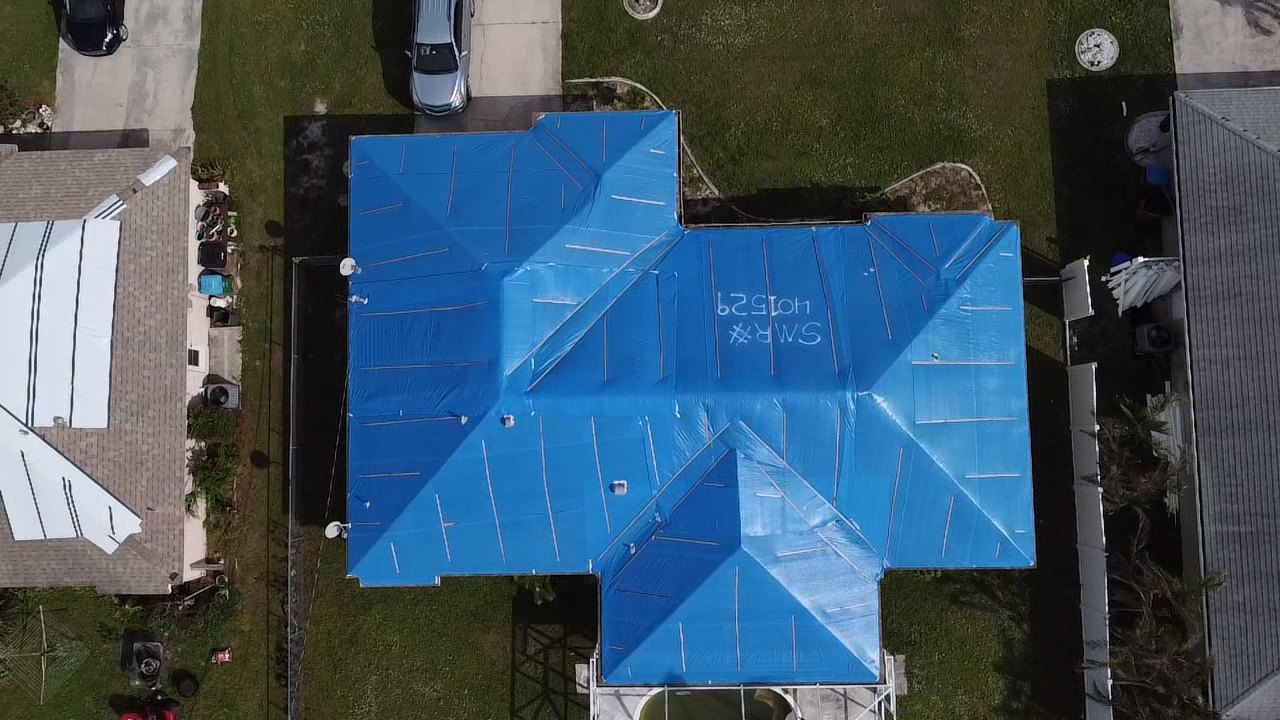
If a temporary tarp can be installed safely, or a broken opening can be covered, reasonable emergency work may be necessary. A roofing contractor can handle emergency roof tarping when it is not safe to do it yourself.
The purpose is not to finish the roof before the insurer sees it. The purpose is to keep a manageable loss from turning into soaked insulation, damaged ceilings, mold concerns, or additional interior damage.
Take pictures before temporary repairs when possible. Then photograph what was done and save the receipt.
Keep the Small Receipts Too
A claim file should include more than the large roofing estimate.
Keep receipts for tarps, plywood, emergency labor, water extraction, temporary boarding, cleanup materials, and other expenses related to protecting the property.
Whether a particular expense is reimbursable will depend on your policy and the circumstances, but it is much easier to submit a receipt you saved than to reconstruct an expense months later.
How to File a Roof Damage Insurance Claim in Florida, Step by Step
A claim becomes much easier to follow when each part has a paper trail.
Step 1: Pin Down the Storm Date
Write down when the event occurred and when you first noticed the damage.
If the loss followed a named hurricane, hailstorm, tornado, severe thunderstorm, or falling tree, record that information as well.
Do not guess at an exact cause if you genuinely do not know. You can describe what you observed and allow inspections to address the technical cause.
The date matters because Florida places time limits on initial, reopened, and supplemental property claims.
Step 2: Pull Out the Policy Before You Need It
The declarations page is a good starting point.
Look at the insured dwelling amount, applicable deductibles, wind or hurricane coverage, and any roof-specific provisions. Then review the sections dealing with duties after loss, exclusions, replacement cost, actual cash value, and proof-of-loss requirements.
One detail catches many homeowners off guard: a hurricane deductible may be percentage-based rather than a small flat dollar amount.
That difference can change how much of a covered loss remains the homeowner’s responsibility.
Step 3: Build a Before-Repairs Record
If permanent work has not started yet, document the property first.
Photographs and video are useful, but older records can matter too. If you have a previous roof inspection, invoice, warranty, permit, maintenance receipt, or photograph showing the pre-storm condition, place a copy in the claim file.
You are not trying to create an enormous evidence package. You are simply keeping information that may later answer questions about the roof’s condition.
Step 4: Handle Emergency Work Carefully
If water is pouring into a bedroom, waiting several days to do anything is obviously not practical.
Take reasonable steps to reduce the immediate damage. Just avoid turning an emergency repair into a full permanent restoration before the condition has been properly recorded.
If damaged material must be removed, photograph it first when possible. Keep the invoice and a short note about why the emergency work was necessary.
Step 5: Report the Loss to Your Insurance Company
Contact the insurer or your insurance agent and tell them what happened.
Have the insured property address, policy information, storm date, and a basic description of the damage available. The description does not need to sound technical.
Something as simple as explaining that shingles came off during the storm and water appeared on the upstairs ceiling may be more useful than trying to diagnose structural damage yourself.
Florida’s consumer guidance recommends that the policyholder make the first contact with the insurance company, rather than having a contractor open the claim for them.
Step 6: Keep the Claim Number Somewhere You Can Find It
Write it on the front of your claim folder or save it in your phone.
From this point forward, keep important communication in one place. That includes emails, letters, photos, estimates, receipts, inspection dates, adjuster contact details, and notes from meaningful phone calls.
The notes do not have to be formal. A simple entry such as “Spoke with adjuster Tuesday, inspection scheduled for Friday morning” can be enough to refresh your memory later.
Step 7: Get Ready for the Adjuster’s Inspection
The adjuster may inspect the exterior roof, interior water damage, attic, gutters, flashing, surrounding property, and other areas connected with the reported loss.
Have your photographs available.
If you know that water entered a back bedroom or that a leak appeared in a closet after the storm, point it out. An inspector cannot necessarily know every place where you saw damage unless you mention it.
When a physical inspection is required, Florida law generally gives the insurer 30 days after it receives proof of loss to complete it, subject to the exceptions in the statute.
Step 8: Get a Roofing Estimate That Actually Explains the Work
A vague figure written on a piece of paper is not very useful.
A proper roofing estimate may address roofing material, underlayment, flashing, ventilation, disposal, labor, permits, accessories, and decking if damaged decking is found. A professional roof inspection and estimate should spell these out.
A roofing contractor can explain what construction work appears necessary and what that work will cost.
That is different from deciding what the insurance policy legally covers.
Step 9: Read the Insurance Estimate, Not Just the Check
This is where homeowners sometimes miss important differences.
Compare quantities. Compare materials. Look at which roof slopes were included. Check flashing, underlayment, disposal, labor, depreciation, and the deductible.
If the insurer and contractor are far apart, look for the reason rather than assuming the difference is simply a disagreement over price.
One estimate may include an item the other did not. Measurements may differ. The insurer may consider part of the condition unrelated to the reported storm.
Florida claim rules also require the insurer to explain a payment, denial, or partial denial in writing in the circumstances the statute describes.
Step 10: Do Not Ignore Damage Found Later
Roofs hide problems.
Damaged decking, trapped moisture, or other conditions may not be visible until roofing materials are removed.
If new damage appears, photograph it before it is covered up again and contact the carrier. Ask how the insurer wants the additional information handled.
Do not assume that every newly discovered construction issue will automatically be added to the claim. It still has to relate to covered damage and the applicable policy terms.
Florida Roof Insurance Claim Deadlines You Should Know
The safest approach is to report known storm damage promptly rather than treating the legal deadline as a target date.
Under Florida Statutes § 627.70132, an initial or reopened property claim generally must be reported within one year after the date of loss, and a supplemental claim generally must be reported within 18 months after the date of loss.
Florida Statutes § 627.70131 adds the insurer’s own claim-handling timeframes, subject to its exceptions. Together they look like this:
| Claim Event | General Florida Timeframe |
|---|---|
| Initial property claim | Within 1 year after the date of loss |
| Reopened claim | Within 1 year after the date of loss |
| Supplemental claim | Within 18 months after the date of loss |
| Insurer acknowledgment of the claim | Generally within 7 calendar days |
| Physical inspection after proof of loss, when required | Generally within 30 days |
| Payment or denial | Generally within 60 days |
How Florida Hurricane Deductibles Affect Roof Claims
A deductible can make perfect sense on the declarations page and still become confusing once an actual hurricane claim happens.
Hurricane Deductible
Florida homeowners may have a separate hurricane deductible for covered hurricane losses.
It is often shown as a percentage of the dwelling coverage instead of the familiar flat deductible many people expect.
That means a 2% hurricane deductible is not 2% of the roof repair bill. The calculation is usually tied to the insured dwelling amount shown in the policy.
All Other Perils Deductible
A different deductible may apply when the covered loss is not a hurricane loss.
Hail, tornado damage, or another wind event may be treated differently depending on the policy and circumstances.
Roof Deductible
Some policies may contain a separate roof deductible.
Florida law limits it. A separate roof deductible is capped at the lesser of 2% of the dwelling coverage or 50% of the cost to replace the roof, and it does not apply when the roof damage was caused by a hurricane, among other exceptions. Check your declarations page and ask your insurer how it applies to your loss.
What About Two Hurricanes in the Same Year?
Florida’s hurricane deductible rules apply on a calendar-year basis for qualifying residential coverage when the policyholder stays with the same insurer or insurance group.
That can matter if the property is damaged by more than one hurricane during the same calendar year.
Do not try to calculate the remaining deductible from memory. Ask the insurer to explain how the policy deductible is being applied to the specific loss.
Replacement Cost vs. Actual Cash Value for Roof Damage
Two homeowners can have similar roof damage and receive very different initial claim calculations.
The reason may be the way their policies value the damaged roof.
Replacement Cost Value
Replacement cost generally looks toward the cost of repairing or replacing covered damaged property with comparable materials, subject to the terms and limits of the policy.
That does not always mean the entire replacement amount arrives in the first payment.
Actual Cash Value
Actual cash value takes depreciation into account.
Age and condition can reduce the initial value assigned to damaged roofing material.
An older roof may have a noticeably different actual cash value calculation from a recently installed roof, even if both sustained similar storm damage.
Recoverable Depreciation
Some replacement-cost policies allow withheld depreciation to be recovered after covered repair or replacement work is completed and the required documentation is submitted.
The exact process depends on the policy.
| Feature | Replacement Cost | Actual Cash Value |
|---|---|---|
| Depreciation | May be withheld initially | Usually deducted |
| Basis | Covered repair or replacement cost | Depreciated value |
| Final payment | Depends on policy conditions and completed work | Reflects depreciation |
Do not rely on a contractor, neighbor, or previous insurance claim to tell you how your current policy handles depreciation. Read the policy and the insurer’s estimate.
What Happens After You File the Roof Insurance Claim?
Once the claim is reported, there is usually a period when several things are happening at once.
An adjuster may be assigned. An inspection may be scheduled. The insurer may request photographs, receipts, estimates, or other documents. A roofing contractor may also be preparing a separate estimate.
After the investigation, the insurer may approve payment, approve only part of the claimed loss, deny coverage, or ask for more information.
The process does not always happen in a neat sequence. A document request may arrive after the inspection. A contractor may uncover another issue later. The insurer may revise an estimate when additional supported information is received. For what happens on the roof itself, see our walkthrough of hurricane roof damage from storm to finished roof.
This is why keeping one organized claim file is worth the small amount of effort.
What Should You Give the Insurance Adjuster?
Give the adjuster information that helps explain the loss.
That may include the claim number, policy details, date of loss, storm photos, videos, interior water-damage pictures, emergency repair receipts, roofing estimates, prior roof documentation, and information about damaged personal property.
A short timeline can help too.
For example, note when the storm occurred, when the leak first appeared, when temporary repairs were made, and when the claim was reported.
The goal is clarity, not volume.
Common Reasons Florida Roof Insurance Claims Are Denied or Underpaid
A denial or smaller-than-expected payment can come from several different issues.
The insurer may believe the roof condition is related to age rather than the storm. It may find evidence of pre-existing damage. The covered portion of the loss may fall below the deductible. A particular cause of damage may be excluded under the policy.
Sometimes the dispute is not really about coverage at all. It is about the repair scope.
A contractor may believe more roofing material has to be removed. The carrier may have different measurements. One estimate may include flashing or other components that the other estimate does not.
That is why the denial letter, coverage letter, and detailed estimates should be read before deciding what went wrong.
What If Your Florida Roof Claim Is Underpaid?
Do not start with the total at the bottom of the page. Start with the line items.
Compare the insurer’s estimate and the contractor’s estimate side by side.
Are the roof measurements different? Is one estimate missing a roof section? Are the materials the same? Was damaged flashing included? What about underlayment, disposal, or other necessary work?
When you find a specific difference, gather the document that supports it. That could be a photograph, contractor report, measurement, invoice, or estimate.
Send the information through the insurer’s claim process and keep a copy.
If the disagreement becomes difficult to resolve or involves questions beyond ordinary roofing work, an appropriately licensed insurance professional or attorney may be able to explain the available options.
What If Your Roof Insurance Claim Is Denied?
Begin with the actual reason in the denial letter.
Was the condition attributed to wear and tear? Did the insurer conclude that the reported storm did not cause the damage? Is there a policy exclusion involved? Was the claim reported outside an applicable time period?
Once you know the reason, you can focus on evidence that is actually relevant.
A roof inspection may document the physical condition of the property. Maintenance records might establish prior conditions. Photographs may show when damage appeared.
None of that guarantees that a denial will change.
A denial should be evaluated against the policy, evidence, and facts of the loss rather than against the outcome of someone else’s claim.
Be Careful Before Signing Storm-Repair Contracts
After a major storm, neighborhoods can fill quickly with roofing signs, door-to-door offers, restoration companies, and claim-related services.
Some companies may be reputable and helpful. Others may pressure homeowners to sign documents they have barely had time to read.
Slow the process down long enough to understand the agreement.
Contractors and Insurance Claims
A roofing contractor can inspect a roof, discuss repair options, write an estimate, and complete contracted roofing work.
Representing a homeowner in the adjustment or negotiation of an insurance claim is a different role.
Under Florida law, a contractor cannot act as a public adjuster for a homeowner unless the contractor is licensed as one.
Assignment of Benefits in Florida
Florida’s rules in this area have changed, which is one reason older internet articles can be misleading.
For residential or commercial property insurance policies issued or renewed on or after January 1, 2023, post-loss benefits generally cannot be assigned to a contractor.
Read current paperwork carefully rather than relying on advice written several years ago.
8 Mistakes to Avoid When Filing a Florida Roof Claim
- Waiting several weeks before documenting obvious damage. Weather changes, cleanup, and repair work can make the original condition harder to show later.
- Throwing away damaged material immediately. If it is safe and practical to preserve or photograph it, do so before disposal.
- Replacing the roof before creating a record. Emergency work is one thing. Removing all visible evidence before inspection is another.
- Leaving an active leak alone. Reasonable temporary measures can help prevent unnecessary additional damage.
- Treating every leak as proof of storm coverage. A leak tells you water is entering the house. It does not, by itself, establish why.
- Forgetting about the deductible. A large percentage-based hurricane deductible can change the financial picture quickly.
- Signing whatever is placed in front of you after the storm. Read the scope, price, payment terms, and cancellation language.
- Scattering claim records across texts, email accounts, and kitchen drawers. Keep one file. It will save time later.
Florida Roof Damage Insurance Claim Checklist
- Before reporting the loss: photograph what you can safely see, note the storm date, take reasonable action to protect the house, and find your insurance policy.
- When you report the claim: contact the carrier, describe the damage accurately, write down the claim number, and start keeping a simple communication record.
- Before the inspection: gather photographs, repair receipts, contractor information, and any older roof records you still have.
- After the inspection: read the insurer’s estimate carefully. Do not judge the claim only by the amount of the payment.
- If more damage appears later: photograph it and ask the insurer how the additional information should be submitted.
Why Trust Elite-Pro Roofing & Construction?
When a Florida storm damages your roof, you need a roofing company that understands both the work itself and the conditions local homes face. Our founder has worked on roofs since 2012, from large commercial programs to family homes across Florida, and Elite-Pro Roofing & Construction has more than 1,100 projects behind it. We are a licensed Florida roofing contractor (CCC1333764), an Owens Corning Preferred Contractor, and certified with GAF and Atlas, with a 5.0-star Google rating from more than 100 reviews. When a storm opens up a roof, our crews provide 24/7 emergency tarping across Northwest Florida. If you want to know how we work alongside the claim process, see our roof insurance claim help page.
Frequently Asked Questions About Florida Roof Insurance Claims
How long do I have to file a roof insurance claim in Florida?
Florida generally allows one year from the date of loss to report an initial or reopened property claim. Supplemental claims generally have an 18-month reporting period. Those are legal limits, not recommended waiting periods. Known storm damage is better reported promptly.
Does homeowners insurance cover hurricane roof damage in Florida?
It can. The answer depends on your policy and the cause of the damage. Covered hurricane wind damage is different from flood or storm-surge damage, which may require separate flood coverage.
Will insurance replace the entire roof after storm damage?
Not necessarily. The insurer will look at the covered damage, policy language, roof condition, repair scope, deductible, and valuation provisions. Damage to one area does not automatically mean the entire roof qualifies for replacement.
Can I tarp the roof before the adjuster comes?
Yes, reasonable emergency measures may be necessary to stop additional water from entering the house. Take photographs before the temporary work when you safely can, and keep receipts.
What roof damage should I photograph?
Photograph visible exterior damage, debris, missing or displaced material, gutters, vents, interior stains, attic moisture, damaged ceilings, and affected belongings. Take both wider views and close-ups where possible.
What if a contractor finds more damage after the claim is open?
Take photographs and contact your insurer. Ask how it wants the additional information submitted. Depending on the circumstances, it may be handled within the existing claim or through a supplemental claim.
How long does a Florida insurer have to pay or deny a property claim?
Under Florida Statutes § 627.70131, insurers generally have 60 days after receiving notice of an initial, reopened, or supplemental property claim to pay or deny it, subject to the exceptions in the statute.
What should I do after a roof claim denial?
Read the denial letter first. Find the exact reason given, then gather information relevant to that issue. If the dispute becomes complicated, consider speaking with an appropriately licensed professional who can advise you about the specific claim.
Final Thoughts on Filing a Roof Damage Insurance Claim in Florida
There is no need to turn a storm claim into a race.
Start with the house. Make sure everyone is safe, photograph what happened, and keep water from causing avoidable additional damage. Then report the loss and build a simple record as the claim moves forward.
A roof damage insurance claim Florida homeowners file can involve more than the visible roofing material. Deductibles, depreciation, repair scope, deadlines, interior damage, and policy wording may all become part of the discussion.
The most useful habit is also the simplest one: keep good records.
If the roof itself is difficult to evaluate from the ground, have a qualified professional inspect it. That inspection can explain the physical repair needs, while your insurer determines what those repairs mean under the policy. To book one, contact Elite-Pro Roofing & Construction.